
Unlock Eating Disorder Recovery
Eating
Disorder Therapy
with Susan Perkins
Work WITH the person you love to help them beat the eating disorder.

Unlock Eating Disorder Recovery

Eating Disorder Therapy
with Susan Perkins, PhD, LMFT, LPC

Meet Susan Perkins, PhD, LMFT, LPC
"Hi! I’m Susan Perkins, marriage and family therapist and founder of Cardinal Points Family Therapy & Education. I’ve worked with a lot of different family situations in my 20+ years as a therapist, professor, and supervisor. I’ve seen how heartbreaking it can be to try to help someone you love beat an eating disorder.
Most families support in ways that make logical sense like offering reassurance, giving compliments, and providing evidence to combat illogical beliefs, and trying to be flexible. But ea
ting disorders–and recovery–are not based in what seems logical to families. So, often the things families do to help just make it worse and actually trigger the eating disorder.
When I started applying family therapy strategies to these situations, beautiful things happened. People started understanding each other. Defensiveness would rage but then dissolve. Instead of walking on eggshells, families started having real conversations about hard things. Relationships were rebuilt. And families started fighting together against the eating disorder and making so much more.
Meet Susan Perkins, PhD, LMFT, LPC
Hi! I’m Susan Perkins, marriage and family therapist and founder of Cardinal Points Family Therapy & Education. I’ve worked with a lot of different family situations in my 20+ years as a therapist, professor, and supervisor. I’ve seen how heartbreaking it can be to try to help someone you love beat an eating disorder.
Most families support in ways that make logical sense like offering reassurance, giving compliments, and providing evidence to combat illogical beliefs, and trying to be flexible. But eating disorders–and recovery–are not based in what seems logical to families. So, often the things families do to help just make it worse and actually trigger the eating disorder.
When I started applying family therapy strategies to these situations, beautiful things happened. People started understanding each other. Defensiveness would rage but then dissolve. Instead of walking on eggshells, families started having real conversations about hard things. Relationships were rebuilt. And families started fighting together against the eating disorder and making so much more.
Unlocking Recovery
Discover how to effectively support your loved one through their eating disorder recovery journey. We'll explore common misconceptions, practical strategies for aid, and ways to foster a supportive home environment that encourages healing.

Foundations of Understanding
Understanding the real impacts of eating disorders beyond food.
Identifying harmful myths and replacing them with supportive truths.
Learning the signs of progress and the pitfalls of recovery.
Communication and Coping
How to communicate without triggering negative behaviors.
Strategies for managing stress and emotions during recovery.
Setting realistic expectations for the recovery journey.


Strengthening Family Resilience
Building resilience and emotional strength within the family.
Encouraging independence while providing necessary support.
Celebrating small victories and understanding setbacks.
Unlocking Recovery
Discover how to effectively support your loved one through their eating disorder recovery journey. We'll explore common misconceptions, practical strategies for aid, and ways to foster a supportive home environment that encourages healing.
Foundations of
Understanding
Understanding the real impacts of eating disorders beyond food.
Identifying harmful myths and replacing them with supportive truths.
Learning the signs of progress and the pitfalls of recovery.
Communication
and Coping
How to communicate without triggering negative behaviors.
Strategies for managing stress and emotions during recovery.
Setting realistic expectations for the recovery journey.
Strengthening
Family Resilience
Building resilience and emotional strength within the family.
Encouraging independence while providing necessary support.
Celebrating small victories and understanding setbacks.
Here’s how it works…
Go from Unknowingly Triggering the Eating Disorder to
Supporting Recovery Without Walking on Eggshells in 90 Days!
Here’s how it works…
Go from Unknowingly Triggering the Eating Disorder to Supporting Recovery Without Walking on Eggshells in 90 Days!
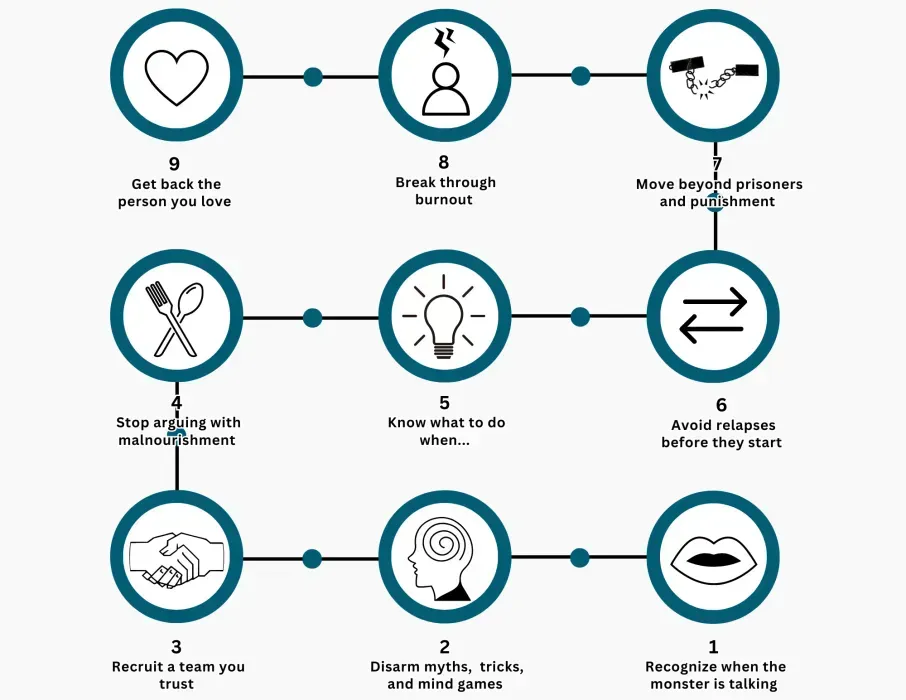
Phases of the Program
Phase 1: Establish a Foundation for Recovery
How to tell the difference between an eating disorder and disordered eating and how to know when your loved one needs professional help.
What to do when you see the eating disorder impacting the person you love but they resist getting better.
What to do when the new diagnosis is confusing and overwhelming.
How to respond when the disease is taking a toll, and you've sought help but need a clear action plan.
How to navigate the levels of care, especially when medical explanations fall short.


Phase 2: Escape the Roller Coaster Ride
What to do when your loved one returns from residential treatment without adequate support.
How to communicate effectively when your loved one is not thinking clearly due to the eating disorder.
Strategies for early recovery stages, recognizing signs of eating disorders, and taking action.
`How to approach food as medicine without worsening the situation, especially when you feel you are a trigger.
Phase 3: Find Hope and Strength in Dark Hours
How to reconnect with your loved one when they seem lost to the disorder.
Navigating diet culture and protecting your loved one from harmful influences.
Gaining the strength needed to support them consistently, even on difficult days.
How to prioritize health and manage life's demands without sacrificing essential family moments.

Phases of the Program
Phase 1: Establish a Foundation for Recovery
How to tell the difference between an eating disorder and disordered eating and how to know when your loved one needs professional help.
What to do when you see the eating disorder impacting the person you love but they resist getting better.
What to do when the new diagnosis is confusing and overwhelming.
How to respond when the disease is taking a toll, and you've sought help but need a clear action plan.
How to navigate the levels of care, especially when medical explanations fall short.
Phase 2: Escape the Roller Coaster Ride
What to do when your loved one returns from residential treatment without adequate support.
How to communicate effectively when your loved one is not thinking clearly due to the eating disorder.
Strategies for early recovery stages, recognizing signs of eating disorders, and taking action.
`How to approach food as medicine without worsening the situation, especially when you feel you are a trigger.
Phase 3: Find Hope and Strength in Dark Hours
How to reconnect with your loved one when they seem lost to the disorder.
Navigating diet culture and protecting your loved one from harmful influences.
Gaining the strength needed to support them consistently, even on difficult days.
How to prioritize health and manage life's demands without sacrificing essential family moments.
Transform how you support your loved one through their eating disorder recovery journey.
Learn to navigate the complexities of treatment and recovery, ensuring that every step you take is one towards healing and understanding.
Transform how you support your loved one through their eating disorder recovery journey.
Learn to navigate the complexities of treatment and recovery, ensuring that every step you take is one towards healing and understanding.
FAQS
How does this program work?
This program is structured as weekly video sessions over a 90-day period. We delve into the intricacies of eating disorders, tackling different themes each week. Expect practical exercises, personalized discussions, and robust support. By the end of the 90 days, you'll have new tools and insights to help your loved one on their recovery journey.
What's covered in the program?
We cover a broad range of crucial topics: understanding eating disorders beyond common myths, effective communication strategies that don't trigger negative behaviors, managing emotional responses, and supporting recovery without enabling the disorder. You'll learn to navigate the challenges of recovery with confidence and support your loved one effectively.
Who is this program for, and not for?
This program is ideal for family members and partners of those struggling with eating disorders who are ready to become informed, supportive allies in their loved one's recovery journey. It's not suited for those looking for quick fixes or who are not prepared to commit to the emotional work required for supporting someone through such a recovery.
What if I’m still not sure?
It’s completely normal to have reservations. That's why I offer a free initial consultation to discuss your situation and what the program involves. This session will help us determine if this approach is the right fit for your needs, ensuring you make an informed decision about joining our recovery support program.
Support Recovery with Susan Perkins
Begin the journey towards healing together.
Support Recovery with Susan Perkins
Begin the journey towards healing together.

COPYRIGHT © 2025. ALL RIGHTS RESERVED.